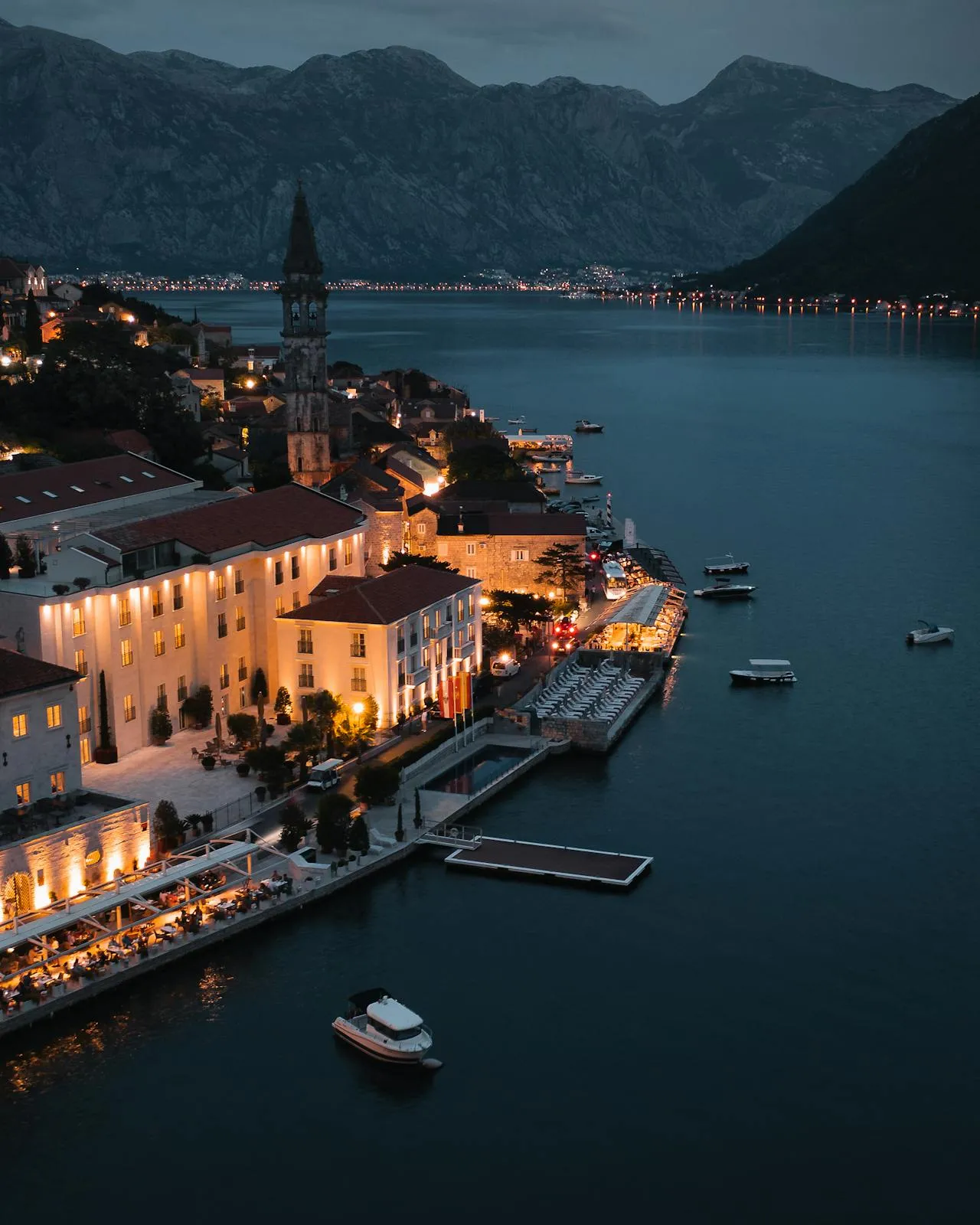
Driving Montenegro from Tivat Airport
Driving in Montenegro is easier than the photographs suggest and harder than the distances imply. The country is roughly the size of Northern Ireland, but it packs a coast, a fjord-like bay, a walled town, a 1,300-metre canyon and alpine peaks above 2,500 metres into that space, and the roads between them twist, climb, tunnel and in one place cross by ferry. Nothing is far away. Some of it is slow.
Tivat Airport sits near the middle of the good part. Kotor is fifteen minutes, Budva twenty, Perast twenty-five, and the Lovcen summit about an hour of switchbacks. Only Durmitor and the far north need a proper road trip rather than a day out, which is why most visitors base themselves on the bay and drive outward.
Is it easy to drive in Montenegro?
For anyone used to European roads, yes, with two caveats. The surfaces are generally good, signage is clear enough, and other drivers are no worse than the Mediterranean average. The coast road is a normal two-lane road that happens to have a spectacular view.
The caveats are width and confidence. Older bay roads and village lanes are narrower than they look on a map, with stone walls instead of verges, so a smaller car is genuinely easier. And mountain roads ask for a driver who is comfortable holding a line on a blind bend without drifting wide. If that describes you, the country is a pleasure to drive. If it does not, stay on the coast and the tunnels and you will still see most of what you came for.
Do you need a car in Montenegro?
For the bay itself, not strictly. Kotor, Budva and Tivat are connected by buses, and a taxi handles a short hop. For anything beyond that, the answer changes quickly. Public transport thins out fast once you leave the coast road, the Lustica beaches and the mountain routes have effectively none, and the whole appeal of the interior is that it is not organised around visitors. A car turns a coastal holiday into a country-sized one.
Collecting Your Car
TIV is the primary collection point. Podgorica Airport offers wider winter schedules. Dubrovnik Airport has the most routes and connects via a two-hour coast road. Start at Tivat Airport car hire, the closest airport to the Bay of Kotor.
Drive Times from TIV
Kotor: 15 min. Tivat: 5 min. Budva: 20 min. Perast: 25 min. Herceg Novi: 40 min. Cetinje: 60 min. Podgorica: 90 min. Dubrovnik: 2 h. Zabljak: 3.5–4 h.
Two things to know about those numbers. The Lovcen serpentine packs 25 hairpin bends into less than 20 km, so an hour is honest rather than pessimistic. And navigation apps consistently underestimate Montenegrin mountain roads, typically by a fifth to a third, because they assume an average speed the bends do not allow. Add a margin to anything inland, particularly if you are driving it for the first time or aiming at a ferry.
Speed limits and enforcement
Posted limits are typically 50 km/h in built-up areas and 80 outside them, with newer expressway sections higher. They change frequently along the coast road as it passes through villages, so the signs are the authority rather than any general rule, and the transitions are where people get caught.
Enforcement is real. Speed cameras sit on the bay road and the main highways, and mobile checks are common in summer. The practical advice is unglamorous: on the coast road you will rarely gain more than a couple of minutes by pushing, because the limiting factor is the traffic ahead of you and not the limit.
Toll roads
Montenegro has very few tolls, which surprises people arriving from Croatia or Italy. The one most visitors meet is the Sozina tunnel between the coast and Podgorica, paid at a booth as you enter. The alternative is the old road over the mountain, which is free, considerably slower and much prettier. Carry some cash for the booth rather than assuming a card will be taken.
What Police Check
Random roadside checks are common and entirely routine, particularly in summer and near border approaches. They are usually brief. Officers typically ask for:
- Valid driving licence (international permit accepted alongside)
- Original rental contract
- Proof of insurance
- Green Card if crossing borders
Non-Negotiable Rules
- Seat belts mandatory, front and rear
- Phones: hands-free only
- Alcohol: the limit is very low, so treat it as zero
- Speed cameras on the bay road and highways
Road conditions through the year
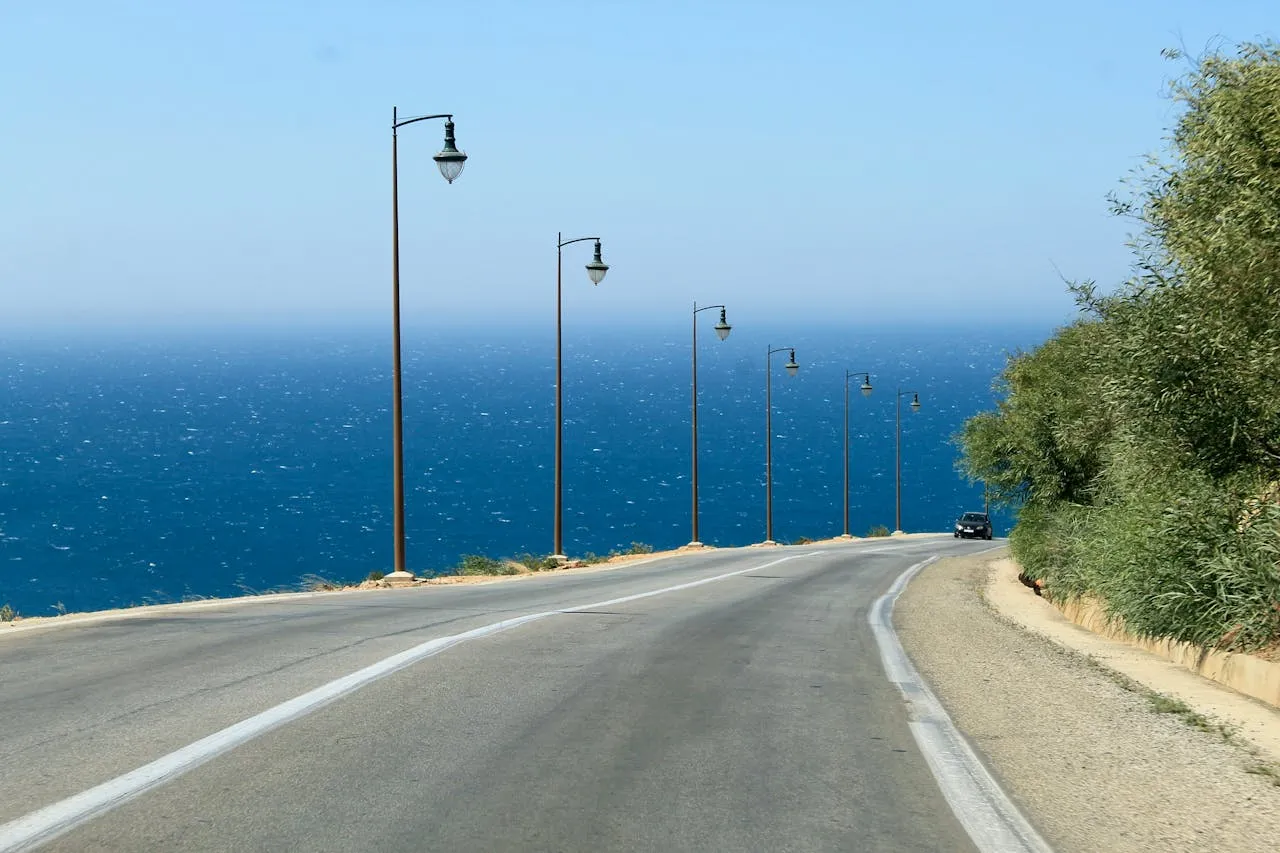
The bay road is paved and well maintained but narrow in the villages, where stone walls come right to the edge. Mountain roads are usually sound underfoot but may lack guard rails, and the drop is the thing people remember rather than the surface. The Sozina tunnel is modern and easy. The Lovcen road is steep, tight and short of passing places, which is why it takes an hour rather than the thirty minutes the distance suggests.
Season changes the picture more than weather does. Spring brings grit and chippings washed onto the coast road, which is the main argument for cover that includes glass and wheels. Summer brings volume rather than difficulty: the roads are the same, there are simply far more cars and tour buses on them, and the bay stretch bottlenecks around lunchtime. From roughly mid-November to the end of March winter equipment is required in winter conditions, and above the snow line that means chains or winter tyres in practice. Confirm the current rule before you travel, since it is set nationally and can move. Whether glass and wheel damage falls to you or not is decided by your rental car insurance level, chosen at checkout rather than at the counter.
Key Routes
E65: The Bay Circuit
Traces the bay from Herceg Novi through Perast and Kotor and on to Budva. It is the road most visitors spend most of their time on, and the one that defines the driving here: two lanes, water on one side, and a view that makes people brake for no reason. The Kamenari ferry cuts the top off the loop and saves a substantial detour around the inner bay, running frequently enough that turning up and waiting is normal.
E762: Coast to Interior
The inland road toward Niksic, the Piva canyon and Durmitor. This is where Montenegro stops being a coastal country and becomes a mountain one, and where the drive itself becomes the point rather than the connection between two places. Allow considerably more time than the distance suggests, and treat it as a full day rather than an excursion.
Parking is the part that catches people out
The driving is rarely the problem; the arriving is. Kotor's Old Town is pedestrianised, so every visitor parks outside the walls and walks in, and in July and August the nearest areas fill by mid-morning. Budva is similar and denser. The workable habit everywhere on this coast is to take the first reasonable space you see rather than circling for a better one, and to arrive before ten or after four in high summer.
Border Crossings
Driving out of the country is normal here and the crossings are routine, but the car has to be permitted for it. Cross-border permission comes in three tiers, and it is chosen when you book rather than at the border: the first covers neighbouring countries except Albania and Kosovo, the second includes them, and the third reaches further afield. Croatia sits in the first tier, so a Dubrovnik day is more straightforward than people expect. Debeli Brijeg is the busiest crossing into Croatia; the smaller ones are generally quicker. Which tier reaches which countries, and what the barrier actually asks for, is covered in the guide to crossing the border by car.
Why Montenegro Rewards Drivers
Independent since 2006 and still lightly visited by Mediterranean standards, it offers quieter roads and easier parking than its neighbours, with the landscape concentrated rather than spread out. That concentration is the real argument for a car: Venetian alleyways in the morning and a glacial lake in the afternoon is an ordinary day here, and it is not a day that public transport can give you.
Driving in Montenegro, the common questions
What visitors ask before their first drive out of the terminal.
Is it easy to drive in Montenegro?
Easier than its reputation suggests. The coast road and the bay road are ordinary two-lane roads in good condition, and the driving is rarely the problem. Parking at the far end and summer traffic volume are what actually cost you time.
Do you need a car in Montenegro?
For the bay alone, not strictly: Kotor, Budva and Tivat are linked by bus. For anything beyond the coast road the answer changes quickly, because public transport thins out fast once you leave it.
Do you need an international driving permit for Montenegro?
It depends on the licence you hold, so confirm the requirement with your own issuing authority before you travel rather than relying on a general answer.
What side of the road do they drive on in Montenegro?
The right, as across the rest of the region. Overtaking is on the left and dipped headlights are required outside urban areas at all times, which catches visitors out more often than anything else.
Are there toll roads in Montenegro?
Very few, which surprises people arriving from Croatia or Italy. The one most visitors meet is the Sozina tunnel between the coast and the capital, paid at a booth as you enter.
Do you need winter tyres in Montenegro?
Winter equipment is required in winter conditions from roughly mid-November to the end of March, and above the snow line that means chains or winter tyres in practice. The rule is set nationally and can move, so confirm it before you travel.