Twelve Centuries Behind the Walls
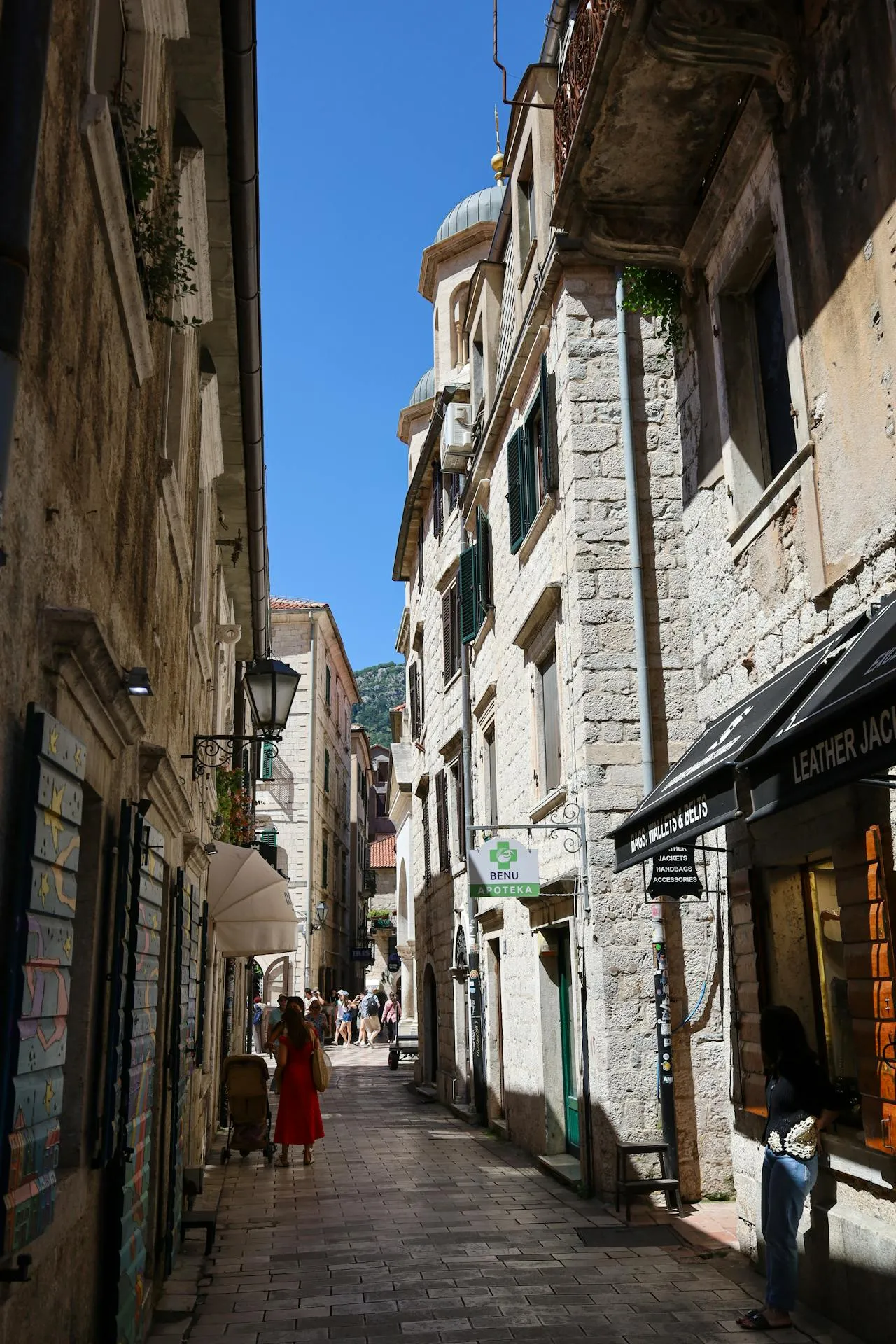
Kotor sits at the innermost point of the Bay of Kotor, wedged between sheer mountains and still water. inscribed the entire natural and cultural region in 1979, recognising both the walled Old Town and the dramatic bay landscape as a single heritage site. Enter through the Sea Gate, built in 1555, and the street plan is essentially unchanged from the medieval period.
From Tivat Airport, the drive takes 15 minutes along the bay road. The largest car park sits below the walls near the River Gate; a quieter option is the Dobrota strip heading north. When cruise ships are in port, spaces fill by mid-morning.
Inside the Walls and Above
St John's Fortress (San Giovanni)
1,355 steps climb from the Old Town to the fortress summit at 280 metres. Venetian engineers reinforced the 4.5 km curtain wall between the 15th and 18th centuries. The view from the top reveals the inner bay splitting into two channels around the Vrmac peninsula. Bring water and proper shoes. Outside peak season, entry is free.
St Tryphon's Cathedral (1166)
A church on this site since 809 AD; the present Romanesque structure dates from 1166. Twin bell towers define the skyline. Inside, a ciborium shelters 14th-century frescoes, and the treasury holds five centuries of gold and silverwork. The patron saint is celebrated on 3 February.
Day Drives from Kotor
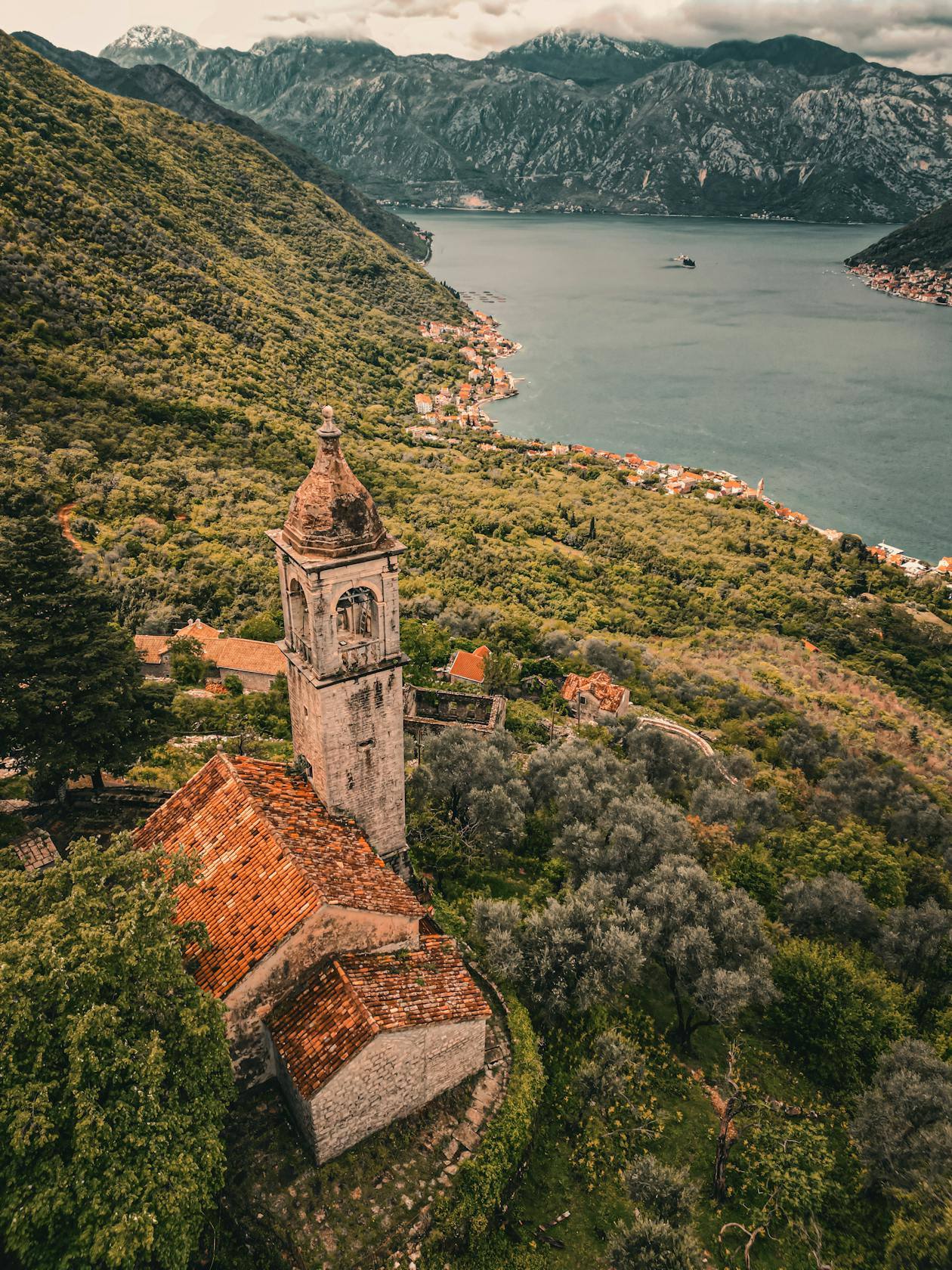
Fifteen minutes north along the bay road, Perast occupies a single waterfront strip beneath Mount St Elias. Park by the harbour, take a skiff to Our Lady of the Rocks, and return for coffee at a palazzo-turned-cafe. Drive to Perast, 15 minutes along the bay, with boat trips to Our Lady of the Rocks.
An hour of switchbacks through Lovcen National Park leads to Cetinje, the old royal capital. The monastery shelters relics said to include the hand of John the Baptist. The Njegos Mausoleum at 1,657 metres offers views across four countries.
The 1871 Royal Court in Cetinje preserves paintings, weapons, and photographs from the era of Montenegrin monarchy.
Kotor is the easiest arrival on the bay: fifteen minutes from the airport, one tunnel, and the only planning the trip needs is where to park, which is covered properly in the drive in from Tivat Airport.
Beyond the walls
The town does not stop at the moat. North along the shore, Dobrota runs for kilometres as a single waterfront street of sea captains' houses, each with a church, a garden and a stone jetty; it is where Kotor goes for a quiet coffee when the Old Town is full. Across the water, Muo faces the walls from the Vrmac side and catches the evening light on them. Swimming here happens off stone piers and platforms rather than sand, and the water at the head of the bay is calmer than anywhere on the open coast.
When to come
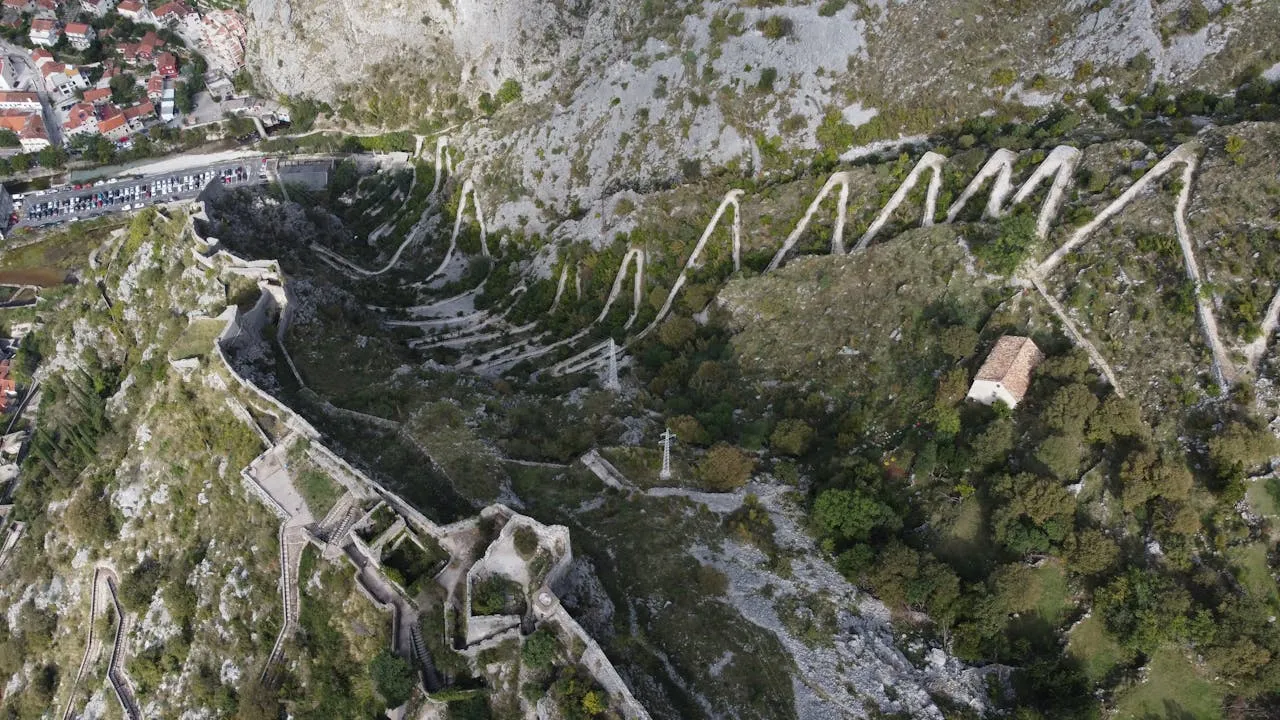
Kotor runs on the cruise calendar more than the weather. Ship mornings fill the gates from about ten to one, whatever the month, and the town that feels overrun at eleven is peaceful again by five. May, June and September give the best light on the walls with the thinnest crowds; deep summer is for early starts and late evenings; and winter Kotor is a local town again, with its carnival in February and the cafes to itself. The climb to the fortress is at its kindest out of season, when the steps are neither hot nor queued. Walkers with more ambition take the Ladder of Kotor instead, the old caravan path that zig-zags up the mountain behind the town towards Lovcen and repays every switchback with a wider version of the view.
Kotor with a car
A car in Kotor is for leaving: the town itself is walked. Park once below the walls and the same keys reach Perast in fifteen minutes, Cetinje in an hour of switchbacks and the Lovcen road whenever the heat breaks. Nothing about any of those drives needs more car than the smallest class in the pool.
Renting a car for your cruise stop in Kotor
Coming in by ship, you do not have to travel to Tivat Airport to collect a car. Kotor Port appears among the pickup places listed for Kotor, although not every car is handed over there, so before you book, check each car for where it can be handed over and whether a fee applies. Ships are usually in port for around ten hours, time enough for a day of your own by car, round the Bay of Kotor to Herceg Novi or up to Cetinje, and back at the quay before you sail.
To time the rental, see the ship arrivals in Kotor for your date.
The climb inland
The hour the Cetinje drive takes is honest rather than pessimistic. The Lovcen serpentine packs 25 hairpin bends into less than 20 kilometres, and navigation apps underestimate Montenegrin mountain roads by a fifth to a third because they assume an average speed the bends do not allow. Budget the day around two hours of driving rather than one, since the same climb has to come back down, and the descent is the half people forget to leave time for. The road is steep, tight and short of passing places, and parts of it may lack a guard rail, which is what first-time drivers remember rather than the surface. None of this argues for a bigger car. The gearbox is the choice that matters: 314 cars in the pool are automatic against 66 manual, so it is a filter you set when you book rather than a gamble.
Tivat Airport to Kotor, asked and answered
The questions that come up most on the short hop round the bay.
How far is Kotor from Tivat Airport?
Kotor sits at the head of the bay, a short drive north-east of the terminal along the shoreline road. It is the closest of the walled towns to TIV, which is why most visitors to the Bay of Kotor fly in here rather than inland.
How long does the drive from Tivat Airport to Kotor take?
Around a quarter of an hour when the road is clear. Allow longer between roughly ten in the morning and one in the afternoon in high summer, when tour coaches running to and from the cruise port slow the whole stretch to walking pace.
Is there a bus from Tivat Airport to Kotor?
Public transport along the bay exists but thins out sharply outside the summer months and does not run to the terminal on a schedule built around flight arrivals. With a hire car you step out of arrivals and are in Kotor within the hour whatever the timetable is doing.
How much is a taxi from Tivat Airport to Kotor?
Fares are set by the individual driver or operator rather than by us, so we do not quote one here. A taxi moves you once; the decision worth making at collection is whether you want a car for the rest of the week, because everything beyond the bay is awkward without one.
Where do you park in Kotor?
Outside the walls, always. The Old Town is pedestrianised, so every visitor leaves the hire car in the paid areas along the waterfront and walks in through the gates. In July and August the closest areas fill by mid-morning, and the habit that works is taking the first reasonable space rather than circling for a better one.
Do you need a car in Kotor?
Not for Kotor itself, which is small enough to walk end to end. A rental earns its place on everything around it: Perast, the Lovcen road, the beaches on the outer coast and the villages along the bay are all short drives that public transport covers badly or not at all.