Two and a Half Millennia of History, 21 km of Beach
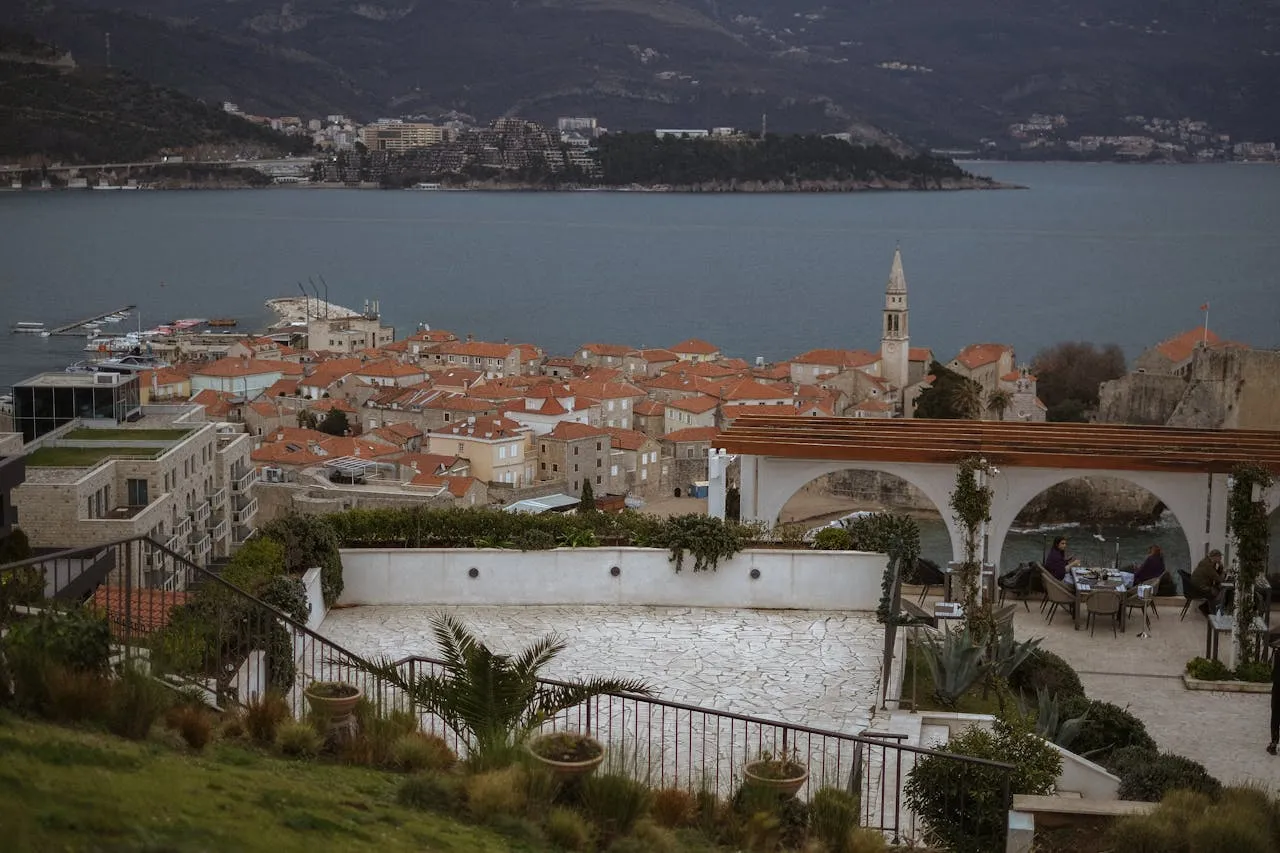
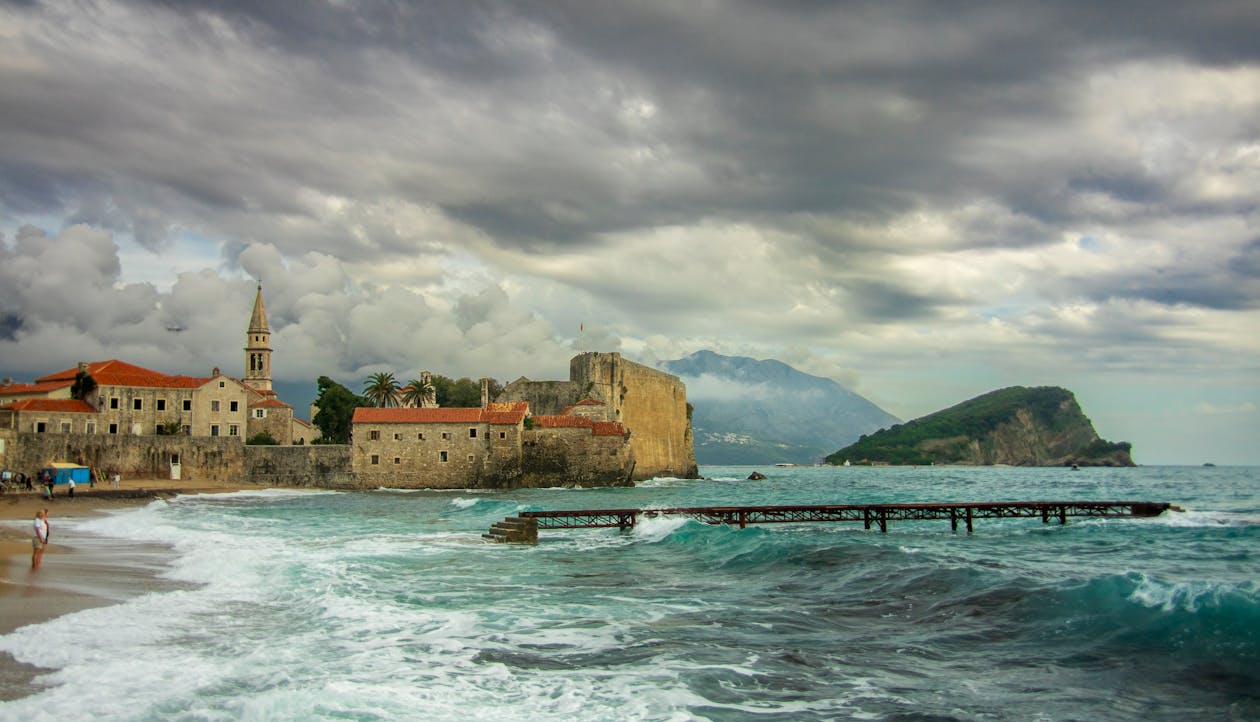
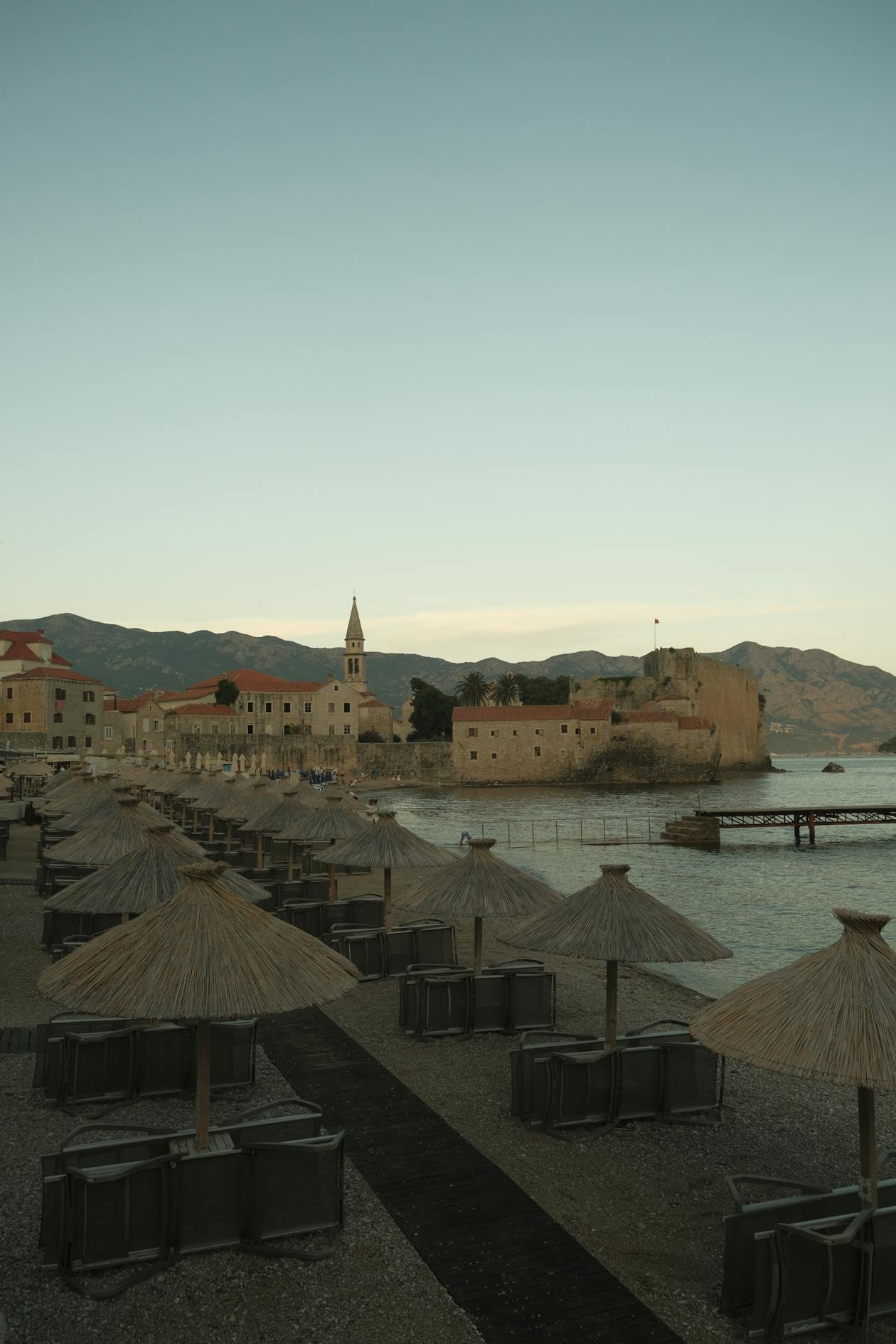
Greeks from Epidaurus founded Budva around the 5th century BC. Romans, Slavic tribes, Venetians, and Austrians followed. The modern town is defined by contrast: a walled citadel on a rocky promontory, flanked by beach bars and riviera sand stretching in both directions.
From Tivat Airport, the drive south takes about 20 minutes. The road skirts the bay before climbing briefly and descending to the Budva riviera. A rental car unlocks the coastline: Mogren coves are five minutes from the Old Town, Jaz beach ten, and Sveti Stefan fifteen.
The Riviera Beaches
Budva municipality claims 21 km of coastline. Four beaches stand out:
- Mogren: Twin pebble coves connected by a tunnel through the cliffs. Walking distance from the Old Town yet secluded once you pass through the rock
- Jaz: The largest sandy beach near Budva, backed by a lagoon. Hosts the Sea Dance festival in summer
- Sveti Stefan: A photogenic fortified islet visible from the highway. The mainland beach is open to all; the island is a private resort
- Bečići: A 2 km arc of fine sand that European writers once voted the continent's finest beach
The Citadel Quarter
Budva's Stari Grad occupies a compact peninsula. Cobbled lanes thread between Venetian-era townhouses, 7th-century churches, and restaurants that spill onto every surface. The Citadela fortress at the southern tip serves as a summer events venue.
Roads Out from Budva
Six kilometres south, the road above Sveti Stefan provides a famous photo angle. The mainland beach is free. Arrive early to beat the coaches.
North through the tunnel, Kotor's Old Town is thirty minutes away.
Inland, the road corkscrews through Lovcen National Park to the Njegos Mausoleum at 1,657 metres.
Parking and Practicalities
The Old Town is pedestrian-only. Car parks fill fast between June and September. Arrive before 09:00 or try lots south near Becici. Collect your car at Tivat Airport and reach Budva in 30 minutes.
The run down from the airport, including when the road jams and where to leave the car, has its own guide in driving down from Tivat Airport.
Inside the Stari Grad
The old town is smaller than its reputation and better for it: a few minutes' walk covers the walls end to end, which leaves the time for what is inside them. The citadel at the seaward tip gives the postcard view back over terracotta roofs to the riviera; Santa Marija in Punta, tucked against the ramparts, has stood in some form since the ninth century; and the lanes between them hold the galleries and bars that keep the quarter alive after the beach empties. Much of what looks ancient is faithful reconstruction: the 1979 earthquake shook the peninsula hard, and the town was rebuilt stone by stone through the following decade.
The riviera after dark
Budva is Montenegro's night-out town, and it splits cleanly. The old town does wine bars, terraces and music spilling out of doorways; the strip behind the beaches does clubs, with the famous ones in the hills above town running until the sky goes pale. Between the two, the Grad Teatar festival fills the citadel and the squares with open-air theatre through high summer. None of it requires the car: the point of staying central is that the evening is on foot and the keys stay on the dresser for the morning beach run.
Where the hire starts
If the plan is a few days in town before the coast, the hire does not have to begin at the terminal. Delivery to a city address is offered on 312 of the roughly 380 cars in the pool, free on some vehicles and chargeable on others, as each listing states. That choice matters more in Budva than in most towns: the old town is walked, the beaches beyond it are the reason for a car at all, and a car sitting in a full summer lot on the days you never leave the beach earns nothing. So pick the shape of the stay first. Collect at Tivat Airport if you want the riviera open from the hour you land, or take delivery in Budva on the morning the driving starts. On cars marked with free cancellation, cancelling more than 24 hours before pickup is refunded in full. On other cars a 6% payment-service fee applies, and a late cancellation can lose the advance payment. Each car shows its cancellation terms before you book. Choose a car with free cancellation and those dates can move if the plan does.
Budva with a car
The car's job here is the coastline, not the town. The four beaches above are spread across a quarter of an hour of driving in each direction, the southern road on to Petrovac is gentler than anything you drove to arrive, and the Lovcen and Cetinje climbs start twenty minutes inland. With unlimited mileage on 376 of the roughly 380 cars in the pool, a riviera week of beach-hopping costs nothing extra in kilometres, and a small automatic is all any of it asks for.
Out of season the town changes character completely: the clubs close, the sea keeps some warmth into October, and the old town returns to the handful of streets it always was. Shoulder months are the riviera at its best for a driver, with the parking pressure gone and the coast road empty. Sea Dance at Jaz briefly reverses the flow in late summer, filling the beach road instead of the town, which is worth knowing if your dates collide with it.
Driving from Tivat Airport to Budva
The route, the timing and where the car goes once you arrive.
How far is Tivat Airport from Budva?
Budva is south of the airport over the ridge, and it is the second shortest run from TIV after Kotor. Most arrivals are on the Riviera within half an hour of collection.
Which road do you take from Tivat Airport to Budva?
Either the coast road, which is slower and far better looking, or the tunnel route, which is quicker and duller. Both are ordinary two-lane roads in good condition, and neither needs anything larger than the car class you would pick for the bay.
How long does the drive take?
Around twenty minutes on the tunnel route with a clear road. The coast road takes longer by choice rather than by difficulty, because you will stop.
Where do you park in Budva?
Outside the Old Town, which is walled and pedestrianised in the same way Kotor is. The paid areas nearest the walls fill first in high summer and the ones a few streets back rarely do, which is worth knowing before you drive the hire car down to the seafront.
Is Budva walkable once you arrive?
The Old Town and the main beaches are, comfortably. Sveti Stefan and the quieter coves further along the Riviera are not, and that is what the rental is for.
Is the coast road or the tunnel better?
The tunnel if you are arriving late, tired or checking in. The coast road on any day you have the time, because it is one of the drives people remember from the trip.